
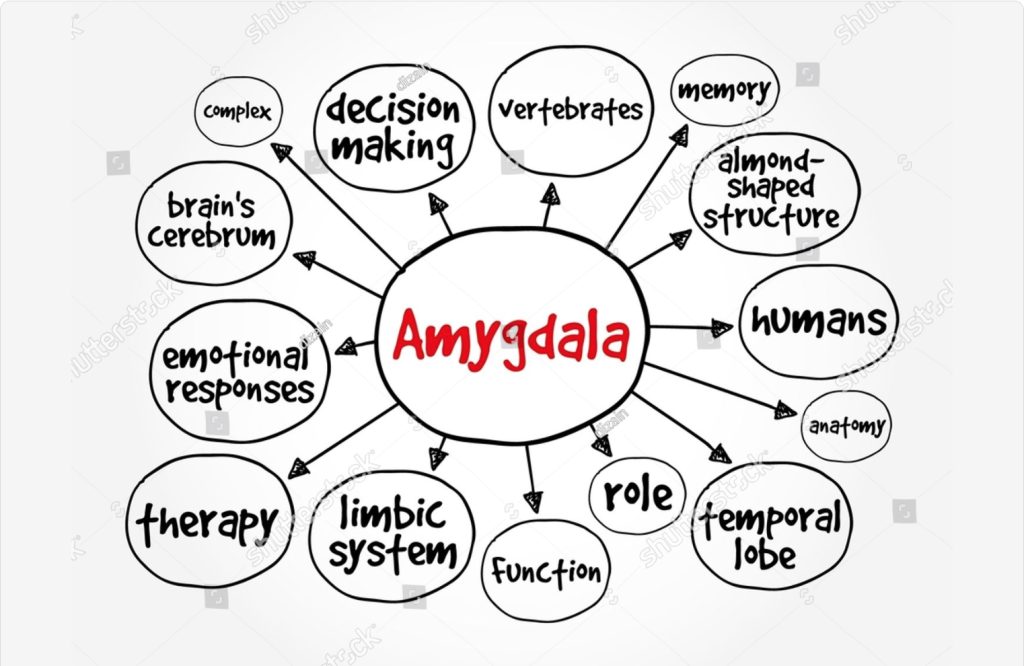
Tinnitus is closely associated with the emotional system (in particular the Amygdala) which is part of the limbic system. When a threat is perceived (as in the onset of tinnitus), it impacts on how we process this new sound, causing survival changes in the body and mind which result in the fight/fright or freeze response.
Emotional Processing Tinnitus
Tinnitus is not merely an issue of the auditory system. Studies show that the amygdala and other parts of the limbic system are heavily involved in how we perceive and emotionally react to tinnitus. For some people, tinnitus remains a neutral background noise. For others, especially those with heightened emotional responses, the amygdala amplifies the distress and discomfort associated with the sound.
This emotional amplification can create a vicious cycle: the more attention and negative emotion the amygdala assigns to the tinnitus, the more intrusive and bothersome it becomes. This explains why stress and anxiety often worsen tinnitus symptoms.
The Fight/Flight/Freeze Response to Tinnitus
To understand why tinnitus can become such an emotional burden, it is because we have not evolved emotionally since our ancestors (the cave dwellers). The fight/flight/freeze response evolved as a survival mechanism, preparing early humans to respond rapidly to threats in their environment, like a predator or sudden danger.
The amygdala’s role was to detect these threats and trigger the body’s alarm system, increasing heart rate, diverting blood to muscles and sharpening the senses. Even though tinnitus itself is not a physical threat, the brain’s ancient wiring may interpret persistent, unexplained sounds as a sign of danger, activating the same pathways and emotional responses that once kept our ancestors alive.
Hearing Loss and Tinnitus
Hearing loss can be a trigger for tinnitus; because the brain searches to hear the missing sounds and in doing so tinnitus may be heard. You may not always be aware that you have a hearing loss as, for many, it comes on gradually.
For those who have hearing loss and tinnitus, the first-line treatment at hospitals tends to be fitting hearing aids which can be effective in reducing the perceived volume of the tinnitus as it allows you to hear external sounds more clearly and thus the brain doesn’t have to ‘search’ and strain to hear sound.
Although noise can cause tinnitus there are other factors that can result in tinnitus, such as illness, some medications and injury. Warning: never stop taking your prescribed medications – you must always speak to your GP.
For many people, stress and anxiety seem to be the trigger for their becoming aware of tinnitus, which is, of course, because of its close link with the emotional part of the brain. Although noise can cause tinnitus there are other factors that can result in tinnitus, such as illness, some medications and injury. Warning: never stop taking your prescribed medications – you must always speak to your GP.

Chesterfield & North Derbyshire
Tinnitus Support Group
07821 132234
chesterfieldtinnitus@gmail.com
Chesterfield & North Derbyshire
Tinnitus Support Group
PO Box 833
Chesterfield
S40 9RU